
Sleep and eczema
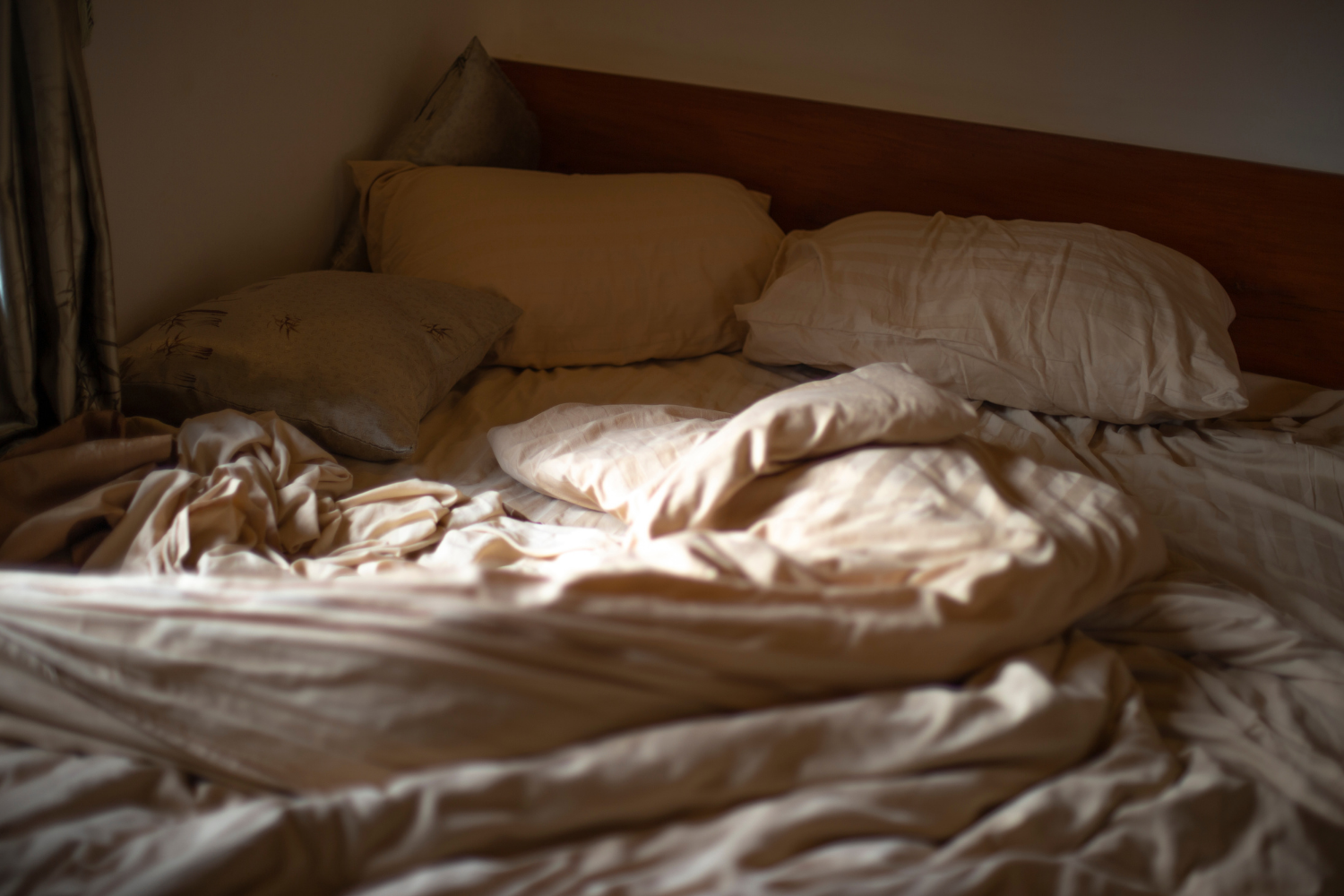
People with eczema often experience disturbed sleep, which can leave us exhausted and more vulnerable to flare-ups. The good news is that with the right bedroom environment, bedding choices and bedtime routine, it is possible to significantly improve the chances of a restful night.
Creating an eczema-friendly bedroom
A good night's sleep is restorative for mind and body, but poor sleep builds up over time and can significantly harm our wellbeing. For people with eczema, the bedroom environment plays a major role in how well we sleep.
Choose the right room
If you have a choice, use a bedroom with a fairly consistent temperature throughout the day. Try to avoid rooms where sunlight streams in before you wake, or that trap heat in the late afternoon, making them hot and stuffy at bedtime.
Deep clean first
For the perfect sleeping environment, start with a thorough deep clean. Remove soft furnishings, including curtains and cushions, and wash or dry-clean them. Working from the top of the room down, clean ceilings, light fittings, walls, furniture, doors, skirting boards and floors. Pull everything out to clean behind, and scrub windows, including frames, as these are an entry point for irritants. Damp-dust wherever possible, as this is more effective than dry dusting for removing dust, pollen and mould.
Keep it minimal
When it comes to furniture, soft furnishings and ornaments, less is more. Every item is a potential host for triggers, so minimise clutter. We spend over a third of our lifetime in bed, and children and teenagers spend even more time in their bedrooms, so it is vital to create an eczema-friendly environment. Choose cupboards with doors rather than open shelving, and invest in a toy box or blanket box with a lid for storing items.
Consider hard surfaces
Some people with eczema find it helpful to replace carpets with hard flooring and curtains with wooden or metal blinds, as they are easier to keep clean and harbour fewer dust mites.
Choosing the right bed and bedding
The Sleep Council recommends replacing your mattress every seven years. After that point, it will have absorbed significant moisture and shed skin cells, making it a prime habitat for house dust mites. Avoid memory foam mattresses, as they mould to your shape, reduce air circulation and make you warmer.
If your children have bunk beds, let the child with eczema sleep on top to avoid dust dropping down on them.
Avoid feather bedding. Choose synthetic duvets and ensure pillows are non-allergenic and easy to launder with a cotton casing. Use anti-allergy protective covers on pillows, duvets and mattresses, and wash them regularly on a hot cycle.
Bed linen should be 100% cotton: it is soft, cool, absorbs moisture and can be washed at high temperatures to remove skin debris, house dust mite droppings and emollient residue. Some people prefer to fold a flat sheet in half and sleep inside it like a sleeping bag, changing it each day to avoid remaking the entire bed.
Managing temperature
Controlling body temperature can be a challenge with eczema, and changes in air temperature can quickly trigger the urge to scratch. Aim to keep your bedroom slightly cooler than your main living areas, ideally between 16 and 18°C.
If you get cold from rolling over in bed and exposing your skin, try using a larger duvet such as a king-size on a double bed. If you overheat easily, use layers you can strip off, or a 100% cotton cellular blanket inside a duvet cover. A summer-weight duvet can also help prevent overheating.
If you and your partner prefer different temperatures, consider separate duvets. If your baby has eczema, keep the cot at a distance from your bed to avoid your body heat affecting them.
If your eczema prefers cooler temperatures, try sleeping with an electric fan on. An air conditioning unit can be especially useful during hot weather. Some people with eczema keep a small fridge in the bedroom for cold emollients and drinks through the night.
Bedtime routine and treatments
During the day, emollients can be applied as often as needed. At night, the aim is for your routine to last through until morning. Many people apply a more intensive emollient before bed. If you use an ointment, apply it well before bedtime, as ointments can block pores and leave you feeling hotter and sweatier.
Wet wrapping using tubular bandages or night-time garments can help people of all ages sleep better. It provides an extra layer of protection if you scratch in your sleep, and the wet layer over a thick application of emollient helps keep the skin's surface cool, reducing itching.
Track what works
Keep a sleep diary to identify patterns. Record your bedtime routine, what you wore, the weather, room temperature, treatments used and stress levels. You might also consider filming yourself sleeping to observe your sleep position, what triggers scratching and how much you move around. This kind of detail can reveal practical solutions, such as needing a bigger bed if you spread out and overheat next to a partner.
Daily and weekly maintenance
Every day, air your room and bedding (unless pollen counts are high, in which case keep windows closed), damp-dust surfaces and vacuum thoroughly. Each week, clean curtains or blinds with a vacuum cleaner or damp cloth. Vacuum your mattress every time you change the bed linen, including along the seams.
Wardrobes should be emptied and cleaned regularly. If air cannot circulate freely, they can attract mould, mildew and pests. Cuddly toys should be washed regularly at 60°C to kill house dust mites. If a toy cannot be washed at that temperature, place it in a sealed plastic bag in the freezer for at least 24 hours, then take it outside and brush it thoroughly to remove dead mites and droppings.
What to wear in bed
Choose natural, breathable fabrics for nightwear such as cotton, bamboo or silk. Cotton is particularly popular as it can be washed at high temperatures. Avoid items with seams or zips that might rub or irritate. If you scratch in your sleep, keep nails short and filed and consider wearing cotton gloves to bed. Select nightwear that covers as much skin as possible for added protection. For children, look for sleepsuits with built-in feet and mittens.
Sleep hygiene
A healthy bedroom environment is important, but good sleep hygiene matters just as much. Simple habits can make a significant difference:
Set a regular bedtime and stick to it
Get fresh air and exercise during the day
Avoid heavy meals, caffeine and alcohol late in the evening
Switch off all electronic devices at least one hour before bed #
Follow a calming pre-bed routine: try light stretching, reading or relaxation exercises, and dim the lights