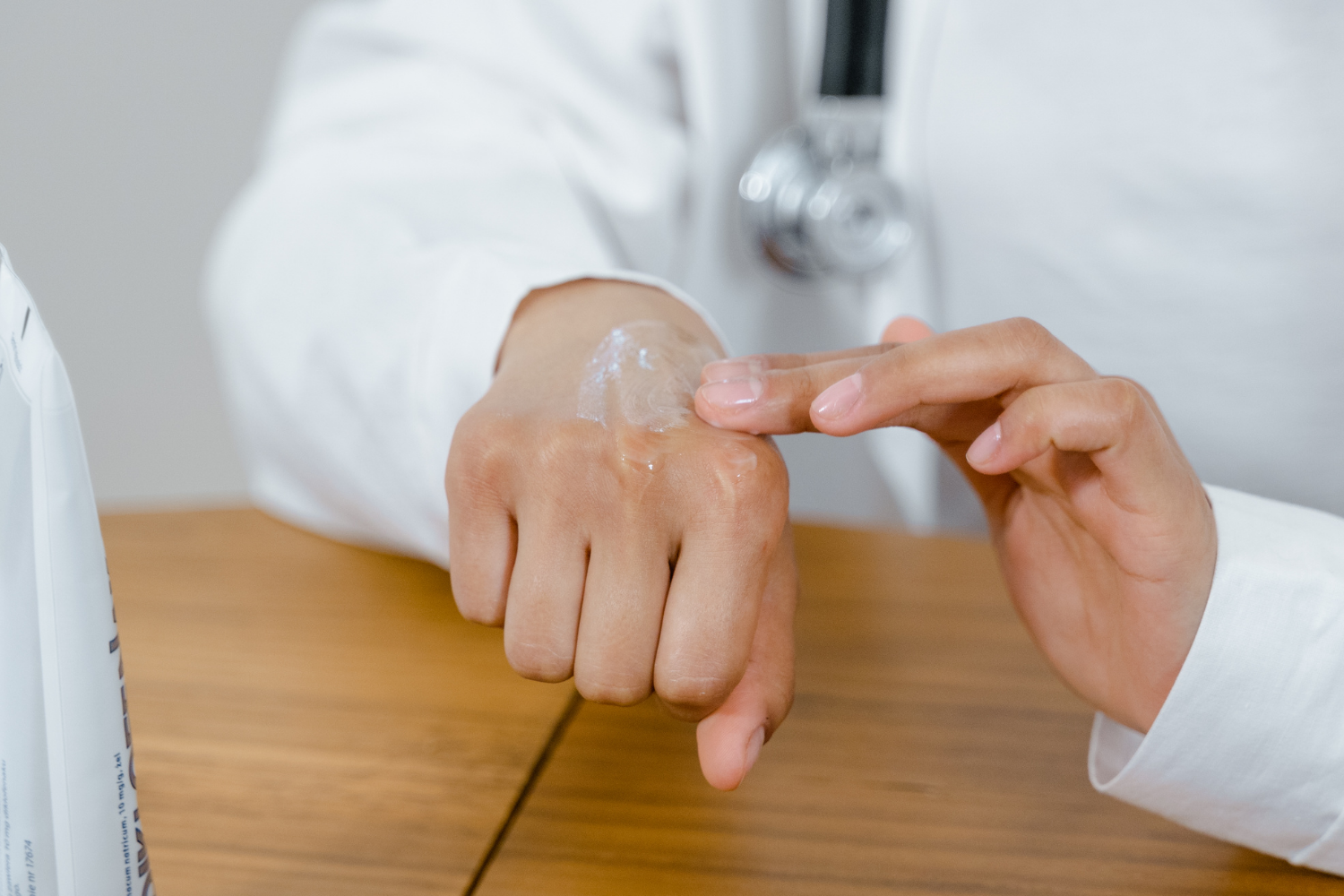
Hope for Hand Eczema: Patient Webinar
Hand eczema is one of the most common forms of eczema, yet it can be particularly persistent and difficult to manage.
On 16 April at 6pm, we hosted our free online webinar, Hope for Hand Eczema: Managing Flares and New Treatment Developments, delivered in partnership with St John's DermAcademy.
Dr Felicity Ferguson and Dr Richard Woolf shared the latest insights into managing hand eczema, including emerging treatment developments. Our expert dermatology panel also answered questions live, offering practical, evidence-based guidance.
You can view the recording below and see the questions our panel answered below:
Community Questions:
Not yet - the current licence is for adults aged 18 and over. However, paediatric studies are underway and it is highly likely that approval for younger age groups, starting with adolescents, will follow in the near future. There are also other JAK inhibitor creams in development for atopic dermatitis more broadly, which may have different age licensing. Watch this space.
At the moment, this treatment must be initiated by a specialist. Depending on where you live, that might be a dermatologist working in a community setting, a GP with a specialist interest in dermatology, or a hospital-based clinic but it cannot currently be started by a standard GP appointment. That said, there is pressure to keep more patients in community settings, so over time your care may be stepped down to your GP once treatment is established.
Clinical trial data is reassuring. The treatment was very well tolerated over a year-long study, with no serious adverse events recorded. Around 1% of people reported a reaction at the application site, though it isn't entirely clear whether this was a localised skin reaction or a flare of the dermatitis itself. Importantly, there is minimal systemic absorption, meaning it stays on the skin rather than entering the body, so there is no need for blood tests or routine monitoring.
Fissures are deep, painful cracks in the skin and are one of the most distressing aspects of hand eczema. They can also become a route for infection, so it is important to address them alongside your usual treatment.
Frequent moisturising and protecting the skin barrier remains the foundation. For deeper cracks, adding a protective dressing can help significantly. A thin hydrocolloid dressing (such as Duoderm) is particularly useful as it can be worn while washing or showering. Steroid-impregnated tapes are another option — fludroxycortide tape contains a moderately potent steroid, while Betasil plasters contain a potent steroid and can be wrapped around affected areas.
Please do not use occlusive dressings if your hands are showing signs of infection.
It can be very difficult to distinguish between these just by looking at the skin, which is why your medical history is so important. A dermatologist will ask about your personal or childhood history of eczema, hay fever, or asthma, as well as your exposure to potential triggers - frequent hand washing, workplace chemicals, or specific products you have noticed causing flares.
When contact allergy is suspected, patch testing is the only reliable way to confirm it. If you have moderate to severe hand eczema that is not adequately controlled with topical steroids and good hand care, patch testing should be considered.
There are a number of reliable resources available:
The British Association of Dermatologists (BAD) has patient-facing information on eczema, specific treatments, and a dedicated leaflet on how to care for your hands
The electronic Medicines Compendium (eMC) hosts patient information leaflets for specific medications, and manufacturers often have their own leaflets too
We has factsheets on hand eczema, pompholyx eczema (which affects the hands and feet), and contact dermatitis and patch testing, as well as a wide range of other booklets and website resources
The Health and Safety Executive (HSE) website has guidance specifically on managing hand dermatitis in the workplace, including what employers should have in place
The same general principles of skin protection, barrier repair, and anti-inflammatory treatment apply. However, if you are finding that your skin is not responding as expected, it is worth considering whether sun damage to the skin, known as actinic damage, might be playing a role alongside the eczema. If problems persist, speak to your GP or a dermatologist who can assess whether something else needs to be addressed.
No child should be prevented from playing sport. The key is protection and good skin care around activity.
Before sport, consider applying a thicker emollient under cotton gloves overnight to give the skin a moisture boost. After sport, wash hands thoroughly and apply plenty of emollient. It is also worth thinking about whether there could be a contact element - for example, rubber handles on equipment like tennis rackets, chalk used in gymnastics, or materials in sports gloves. If flares are persistent, patch testing is worth discussing with a dermatologist, as children can develop contact allergies from as young as three years old. Fragrances in hand creams and preservatives in products are among the most common culprits in children.
Yes, stress is one of the most commonly reported triggers for eczema flares, and hand eczema is no exception. The relationship between stress and the immune system is not fully understood, but many people notice a clear connection.
It is also possible that stress affects how you manage your condition day to day - for example, changes in behaviour like increased scratching or rubbing, or being less consistent with treatments. While stress may not be the underlying cause of hand eczema, it can certainly tip you into a flare if you are already vulnerable.
Yes, and this is an area that deserves more research.
Many women report that their skin flares cyclically during their menstruating years, and perimenopause can be a trigger for new or worsening eczema. Post-menopausally, skin naturally becomes drier, which weakens the skin barrier and increases the risk of eczema flares on the hands and elsewhere.
Pregnancy and the postnatal period can also be a factor - new parents often develop hand eczema for the first time, largely driven by the significant increase in hand washing that comes with caring for a baby.
A simple but effective tip: decant your usual emollient into a small travel pot and carry it with you.
Most emollients can double as a soap substitute for hand washing, so when you are in a public toilet, use your own emollient rather than the soap provided, which is often a harsh detergent that can set your skin back significantly. Making this part of your daily routine, alongside your keys and phone, can make a real difference.
Possibly. There are documented cases of contact allergy to metals in phone screens, and to rubber accelerators or silicone in phone cases.
If you have eczema predominantly on one hand, particularly the hand you use to hold your phone, it is worth mentioning this to a dermatologist. Patch testing can help identify whether a contact allergy to these materials is contributing.